Rethinking School Leadership

Rethinking School Leadership

In May/June 2019, a column I published in the National Association of Elementary Principals Magazine highlighted the impact of inequity on principal longevity. For some time now, I have been concerned about the turnover rate among principals, especially those who serve high-poverty student populations. A recent report, Principal Turnover Insights From Current Principals, by Learning Policy Institute and the National Association of Secondary School Principals echoes my sentiment and highlights key considerations for principal support and retention;

  • High-quality professional development
  • Support from strong administrative teams
  • Adequate school resources
  • Competitive compensation
  • Appropriate decision-making authority
  • Evaluation centered in timely, formative feedback

The insights are from the most credible source: practicing principals. I think it is something every education leader needs to read. More concerning is the preliminary results of NASSP and LPI’s study of principal attrition which shows that 35% of principals never make it beyond their 3rd year of tenure. If we want to do a better job of recruiting and retaining principals, we must explore these insights fully, and where possible, take bold action to protect the future of the principalship as a critical professional position in our society. 

High-Quality Professional Development

The school principal must serve as the instructional leader. It is imperative that each school leader possesses the scholarship, skills, and abilities to inform teacher practice in ways that advance student learning. We cannot rely on principal preparation programs to provide this level of readiness when it comes to instructional leadership. Traditionally, these programs have focused on operational issues: finance, personnel, and building management. What those entering the principalship need and those in it must have to improve student achievement includes knowledge of the teaching and learning process, specifically high leverage learning strategies, assessment literacy, and coaching skills to impact teacher practice in positive ways. Unfortunately, principals tend to experience professional development that focuses on the operational aspects of the job. Monthly principal meetings to review plans, budgets, and carry out mandates seem to rule the time and support they receive from district level leaders. As we move forward in public education, we must rethink how district and state level leaders provide principals with the kinds and quality of professional development that can support them in improving their instructional leadership capacity.

Support from Strong Administrative Teams

Work life balance is a challenge in many professions, but as a former principal, I tend to believe that this is especially challenging for school principals. Working with a strong body of administrators can help alleviate some of this challenge, but I have often wondered if it is time to restructure school leadership. Perhaps it is time for us to look beyond the traditional structure of school leadership: principal, assistant principal, dean of students, etc., and look toward a new organizational structure. Repurposing other positions might help districts better design supportive and strong administrative teams that can help principals focus on instruction. Operational Manager, Student Services Coordinator, and Assistant Principal are roles that come to mind. Each could take on the responsibilities related to facilities and maintenance, transportation, non-academic student needs (mental health, discipline, physical health, counseling) while the Assistant Principal works to hone his or her instructional leadership capacity in coordination with the principal. I would also venture to say that principals need coaches, in real time, who can give formative and timely feedback, but support them while in action.

Adequate School Resources

It is important to recognize that without access to a sufficient quantity of timely resources related to school improvement goals, principals face the incredible task of overcoming student achievement deficits and meeting the needs of teachers and staff. While this can seem simple in theory, in practice, this is something faced by many school leaders. When a principal’s effort to obtain the resources that teachers and students need to accomplish goals become more strenuous than accomplishing the improvement goals themselves, the focus of the leaders work shifts from improving the practices of students and teachers to securing needed resources. These things work in concert; in other words, principals must have access to adequate resources in their attempt to serve as strong and effective instructional leaders. 

Competitive Compensation

Principals have a variety of responsibilities: school safety, academic achievement, professional development, financial management, facilities management, and more. In comparing responsibilities of principals to that of other credentialed professionals who serve in leadership roles, it would be interesting to see the discrepancy between average principal roles and other supervisory positions in other fields. I do not have the figures or information to make an accurate comparison, but I am of the belief that a discrepancy exist and look forward to exploring this aspect further. 

Appropriate Decision-Making Authority

I recently heard someone quote a superintendent of schools as saying, “We are moving from a system of schools to becoming a school system.” While I certainly can relate to the importance of addressing challenges in a systematic fashion, it is important to note that principals need to be able to consider their context when solving problems specific to the students and teachers they are serving. Knowing what to apply broadly (across all schools) versus what to apply in a more targeted, and specific way is the challenge of leadership. There are some universal best practices when it comes to teaching and learning, and those best practices remain so regardless of the demographic of students served or school type. Our challenge, however, is in helping school leaders learn how to contextualize solutions for the given deficiencies of their school so that they avoid replicating solutions that have worked in other contexts without adapting them for the context in which they serve.

Evaluation with Timely, Formative Feedback

One way to accomplish this is by restructuring of district level positions that support and provide services to principals. Instead of simply providing a supervisor of principals, providing principal coaches who can give real time formative feedback and support to principals has the potential to change the practices of principals in ways that help them center their efforts on instructional leadership. Following the traditional methodology of principal evaluation results in fragmented feedback, retroactive recommendations, and little that principals can act on immediately or put into practice in an action research fashion. When principals receive feedback about their performance after the school year has ended or at the close of the school year, it creates a tremendous gap between action and reflection and that often does not result in changed practice. A change in practice is most likely when action and reflection happen in close proximity to one another.

Conclusion

Principal turnover and retention is a real problem that needs real solutions. Instability of leadership has a multitude of implications on teachers, students, and parents. We need to rethink the organizational support structure for principals as leaders and critical elements to the success of teachers and students. Our failure to reorganize, restructure, and most importantly, rethink what is necessary for principal success has the potential to cause problems in the field of public education far beyond a high rate of turnover. 

Until next time,

Latoya

@latoyadixon5

Beyond Knowing Your Why: Let’s Talk About How Too!

In recent years, there has been much conversation about the importance of individuals within your organization understanding their purpose, also often referenced as “knowing your why”. While this is certainly an important concept, what is often missing in our quest for improving our organizations, are the methods others might utilize to improve their practices. We can become so intimately involved in focusing on the why of our work, that we neglect the HOW of our work. We spend a great deal of time telling others why we are doing what we are doing and what we would like them to do, and absolutely provide minimal knowledge and information on how to make the much needed changes. If we aren’t careful, we’ll find that we’ve sent folks on a mission with a purpose, but little to no tools to improve it.

What we need right now to improve our organizations, schools, and our lives perhaps, is a fierce focus on the how. In our schools, we have an opportunity to anchor teaching and learning with a defined set of evidence-based pedagogical practices that should be present in every classroom. We can provide high quality professional development opportunities to help teachers work on the how of instruction. We can give teachers the quality of feedback they need and deserve to become proficient at the pedagogical practices that we know result in high outcomes for all learners.

Let’s not allow our focus on the “WHY” make us abandon the much needed focus on the HOW.

Until next time-be you, be true, be a hope builder.

Latoya

@latoyadixon5

Connection: What Every Educator & Learner Needs

I’ve come to realize that there are few things more important to learners and educators than to belong to a community that embodies what we all want and need: personal connection, an opportunity to grow, and people to do it with who encourage, support, and stretch us in ways that allow us to meet our potential. In this era of hurried living and convenience concept inventions, like DoorDash to deliver a hot meal from most any restaurant, not just the local pizza place, and Shipt, that will save you a trip to the grocery store if you still wish to cook at home, but don’t have the time or energy to complete a physical trip, connection has become a commodity.

People are seeking authentic networks-both personal and professional ones; they are in search of belonging, of purpose, of contributing to a cause greater than themselves. What’s interesting about how technology has in some ways given us an opportunity to be more widely connected to events and organizations, and even people, in a sense, across the globe, it’s also elevated the deep desire of all humans- to be linked and intimately connected to others. We all need that experience and opportunity to laugh, love, and live a full life. No matter how convenient some of the revolutionary technology may have made some of our routine activities, we still have a deep need to be connected to one another.

While we may be thrilled to not have to stop by the grocery store on our commute home from work, pressing “like” on our social media applications isn’t the same as saying, “Hi. How are you?,” and giving someone you haven’t “seen” in some time a big hug. No matter how well technology allows us to “see” our family and friends via pictures, videos, and posts, what we gain by being a part of a community and sharing successes, failures, triumphs, and struggles together cannot be compared. It is the process that comes with these experiences that ends up linking us to others for an extended friendship, sometimes for a lifetime.

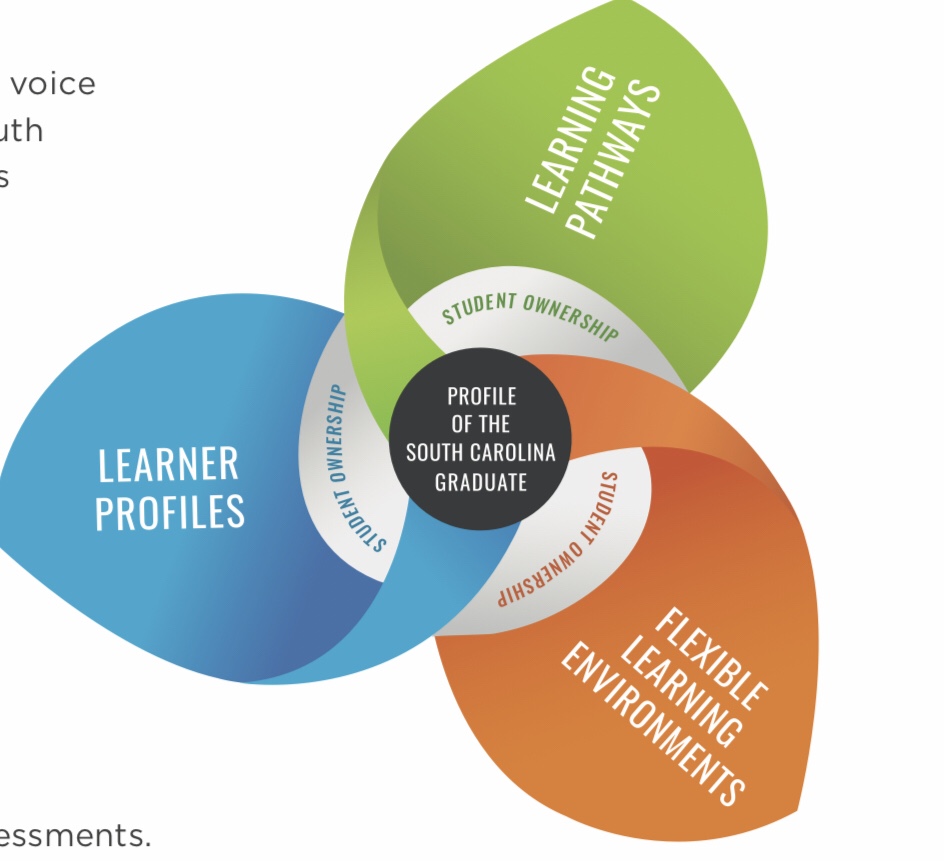
As I attended the first personalized learning conference in South Carolina today, I was struck by an ever present theme that ran through the entire construct: relationships. At the center of being able to personalize learning experiences for students is the ability to develop a connection that is authentic and trusting enough to support educators in designing teaching and learning activities that work for each child. Without this connection, the power of flexible learning environments, learner profiles, learner pathways, and student ownership is limited. What personalized learning asks us to do as educators is to honor the human element at the center of our work: students. In order to provide our students with an equitable learning experience that creates a guaranteed opportunity for reaching the outcomes they set for themselves and we set for them, we must start by being connected to the students we are teaching and to our colleagues who are in this work with us.

That connection must not be underestimated. It is the sustaining element and critical factor in making personalized learning more than an idea, an initiative, or the latest and greatest ed reform topic. It’s personal and that is why I believe it is at the heart of what educators and students alike need-a trusting community of peers and partners to learn, grow, thrive, and connect with to live full lives where each person can be sure their potential isn’t underestimated or out of reach.

In the years and decades to come, I believe this need for personal connection, strong, trusting, relationships, and learning communities will remain a solid and essential concept in our profession. Above all else, we’ll continue to find that our relationships with one another are really the glue that holds us all together.

Until next time! Be you! Be true! Be a hope builder!

Latoya

@latoyadixon5

SEL for Educators-Also needed NOW!

There’s a widespread focus on the need for social emotional learning in our schools. Our students are faced with more trauma and bring an emotional deficit, disruption, or traumatic make up with them to school each day. As a result, educators are being tasked with teaching the standards and helping to create whole, healthy, and healed young people. The need for a renewed focus on SEL is very logical and clearly understood. However, we should not assume that educators are mentally and emotionally healthy enough to support the students they serve. Often broken themselves, they too need help healing, a focus on their wholeness and mental health. However, this need, is not being described here as one that should rise above the needs of students, but one that is equally important. The need to focus on the mental wellness of our educators seems to be missing in the persistent advocacy for social emotional learning. The wellness of our educators cannot be overlooked. While some see the sharing of burdens educators face in this profession as whining, selfish, and a distraction from their focus on students, I see it quite differently. We know that broken people can’t help others become whole, that those who are in a disharmonious state, whether it be personally or professionally, find it difficult to be the sense of calm in a student’s world of chaos. For sometime now, I’ve been thinking and writing about the importance of educator wellness, and I want to make a clear distinction that I’m talking about every educator: teachers and administrators.

While some are quick to note that teaching often comes with working 10 months out of the year instead of 12, it is important to recognize that unlike others in professions like engineering, business, or finance, educators are tasked with being exposed to the burdens of young people daily.

Story after story, my mind recalls all the things I carried home as a school principal and teacher. Like the time one of my students asked me to help him find somewhere to take a shower because he hadn’t been able to bathe in days, or the student who I watched eat from the trash can in a community eligible school that was 100% free lunch, or the student who ran away from home one weekend, whose father had allegedly attempted to kill her as a young child and mother was a known prostitute, or the student who was murdered by her grandfather after losing her mother to cancer, and surviving a nasty divorce. Those are just a few of the stories that live in my heart, and that I carry with me each day.

The trauma educators are vicariously exposed to can be difficult to deal with and damaging. What educators are tasked with is quite different than being stressed about a product coming in on time so that production of a device can be complete by the deadline or a delay on shipment causing an issue with quarterly projections. It doesn’t quite feel the same as the stories above. As educators we work with human beings and while we are certain of the difference we make in the lives of our students, an investment in the wellness of educators: mind, body, and spirit, is long over due.

We’ve subscribed to an “educators are givers and not takers” mentality for far too long. The missionary nature of our work and our deep desire to love and educate children doesn’t mean we are equipped to handle all that we are faced with in today’s public schools. From social media posts about why teachers are leaving the profession to conversations with my friends who are still in the classroom, educators are crying out for help. Our emotional well-being has a direct impact on our children and when we are healthy, we can be better educators for students and better people for ourselves.

I’ve often wondered what would happen if schools were built to include a wellness center for staff-a place where educators could exercise, meditate, sit quietly, or even work with a counselor. What if we had a registered dietitian on staff who helped staff develop and maintain healthy eating habits? What if we had group therapy sessions where teachers had a place to talk about and deal with the repeated exposure to the trauma their students face but also were able to receive recommendations on next steps and how to deal with the stress in healthy and healing ways? Think about the teacher who is trying to help her students be proficient in the area of social-emotional learning, but also dealing with her alcoholic husband and heroine addicted child. Is it safe to say that the teacher is over burdened? Should she simply have chosen a different profession if she didn’t really love teaching? Should her dedications and commitment be questioned because she is unable to “leave her problems at the door” when she arrives at school? I know that teacher because I was her principal.

Contrary to what I’ve heard from many and have been guilty of saying in the past, none of us leave our burdens at the door when we enter work. They live within us, in our hearts and in our minds, and they have a tendency to manifest when we feel like we can’t control what’s happening to us personally or professionally. Why should we expect folks to operate absent from who they are, their lived experiences, the good, bad, and ugly?

Would an increased focus on wellness and the social emotional health of educators result in an improves retention rate of principals and teachers? Might we be able to keep new teachers who tend to leave within the first five years in the profession longer? Might we be able to keep administrators in high poverty schools that have 30% principal turnover rates in their positions longer and more successfully? Might our nation prove well to invest in those who care for its’ children? I could be way off base, but I am willing to bet that any educator who reads this will likely be in agreement that the social emotional learning movement can not be absent of the need to invest in the wellness of educators.

Until next time-be you! Be true! Be a hope builder!

-Latoya

@latoyadixon5

A Little Bit of Good

This week I attended ASUGSV19 in San Diego. It was amazing to be with so many people who are thinking about the future of human potential. As a first timer to this conference, I have to admit the first morning of the first day was a bit overwhelming. Thankfully, my colleagues Lauren and Stephanie, who were with me and had attended before actually helped me get my bearings. That being said, being in the room with venture capitalists, start up CEOs, and ed tech folks and others, made for a brand new experience. There were a few common themes beyond the obvious one, bending the arc of human potential, that arose. These people were future focused, desired to bridge the gap between education and the future of work, and leverage technology to improve economic mobility.

As I attended various sessions I found myself initially questioning the authenticity of the experience, questioning whether or not some of the people actually meant the why they expressed, and wondering what was at the root of their efforts. I was trying to make meaning from it all and I wanted to feel confident and secure that everyone meant well and would do well by those whose lives would be impacted by their technology, investments, and efforts. Immediately I exercised a lack of trust and then was later convicted by my own conscience.

After much thought and on my last day at the conference, it hit me: A little bit of good is good. We can’t always know how far or how wide our reach will go and we can’t be sure of the size and degree of our impact. However, if our intention and our effort results in making a difference, how much difference is made shouldn’t discredit the good that’s done. A little bit of good is good because everyone’s little bit of good can come together to create a lot of good.

We have to start some where and few ideas or efforts result in solving multiple problems. No solution is perfect and some good is certainly better than none at all. I am hopeful that my desire to see a more equitable public school system does not become intimidated by the daunting tasks ahead or the complexity of the issue. Instead, it is my desire that we all continue to do our little bit of good and hopefully, the sum of the efforts of the equity action oriented folks and equity minded people will be a great deal of good.

I’m going to be sure to keep doing my little bit of good in this corner of the universe. Join me?

Until next time, be you! Be true! Be a hope builder!

Latoya

@latoyadixon5

Instructional Leadership: The Heartbeat of School Administration

Being a school administrator is an enormous responsibility. There are a variety of roles school administrators must fill. They must be excellent communicators, great relationship builders, and good managers of people, resources, and processes. School administrators have the audacious task of serving students, parents, teachers, and staff. This is not an easy task. It is complex and difficult. The days are long, the rewards great, and the pressure to do it all and do it well is present. At the heartbeat of school administration however, is instructional leadership. Too often, folks pursue the leadership role for its surface structure. They think it might be fun to be the face of the school or perhaps they are attracted to the idea of being in charge…whatever that means. What happens often in school administration is that those with a love of instruction and curriculum, with teaching and pedagogy see the administrative route as a mismatch for their skill set and passion. I contend that those people are exactly who we need as instructional leaders and school administrators.

High-Expectations are not enough.

So many school leaders believe they are charged with setting high expectations for staff and students, and while that may be true, high expectations alone aren’t enough. A leader who compells his her staff to change and provides an explanation of why change is neccessary isn’t the same as one who also shows staff how to change. Of all the time school adminstrators spend in school buildings, providing valuable feedback to teachers around the how of change is most critical. Too often the focus is centered on what and on why, with little attention given to the how, and teachers find themselves searching and trying to figure out exactly what the principal wants to see in their classroom. Instructional leaders must move beyond a compelling why and a clearly defined what. They must give teachers a clear articulation of how their teaching and/or pedagaogy should change to improve student outcomes. An instructional leader sees this as the most important mechanisim by which her or she can effectuate change in instructional practices and thereby advance student learning. A simple demand for teachers to perform better, be more effective, and the like just isn’t enough.

Coach the behavior to coach the data.

My sister, who has a career in business, said to me in one of our many conversations, “You can’t coach data. You coach behaviors.” I was awestruck by her idea. In a field like public education where we use the term data-driven as often as an article in the English language, I took a few minutes to process what she was saying. She went on to explain that in order to help people produce better results, you have to focus on the behaviors that are neccessary for such improvement. A simple conversation around data, around a percentage of students who have not met standards, around the number of students who didn’t fare well on the assessment, won’t produce a change in practice. To change practice, we must coach behavior. That is, we must coach teachers around the instructional practices that impact student learning. Data in and of itself tells us what’s wrong and where to look, but it does not tell us how to fix it and that is precisely what people need to know: how to fix it. Instructional leaders don’t just point out what is wrong. They are precise in guiding and coaching teachers on how to fix those areas of ineffectiveness.

Start with your learning.

I want to know what makes effective teachers effective. I want to be certain about what practices are those that make learning most possible for students. To learn that, I read a great deal. I study. Recently, I’ve been digging deep into Cognitive Science. This has been a very interesting personal research study because it makes clear what many scholars have written about in terms of high-yield learning strategies. Our brains are in best shape to learn when we account for cognitive overload, analogical transfer, and constructivisim. If we know this, our duty as professionals is to dig deep into the pedagogical structures and strategies that best account for these. Instructional leaders don’t guess about how to make academic learning and effective teaching happen. They study it. They read. They research. Instructional leaders are learners first and foremost.

At the core of being a school administrator, is the responsibility for teaching and learning. Instructional leaders see their purpose as two fold: to improve teacher practice and to advance student learning. Everything else is icing on the cake.

Until next time, Be you. Be true. Be a hope builder.

@latoyadixon5

The Trouble With Feedback

Feedback is defined as information about reactions to a product, a person’s performance of a task, etc. which is used as a basis for improvement. It’s something we all say we want. It’s something that can be difficult to deliver. It’s something that sounds like a screeching and high pitched sound designed to burst eardrums when it is coming from a microphone. Perhaps that is symbolic of what it feels like to those who have difficulty receiving or giving it.

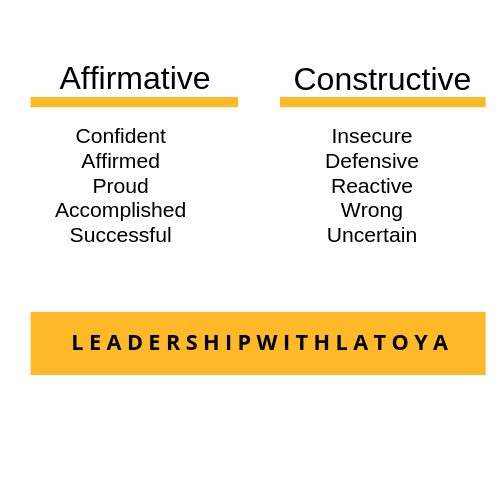
Where does your mind go when you receive affirmative feedback? For me, it makes me feel really good. I feel proud and accomplished. I like knowing I’ve delivered what was desired of me. It gives me confidence a boost. On the other hand, when receiving constructive feedback, I have to coach myself to listen, not defend, to process, not respond, and to reflect instead of reacting. I think I’ve improved a great deal at this over the years, but I am still working on it. Here’s how it usually plays out for most of us:

Feedback blog

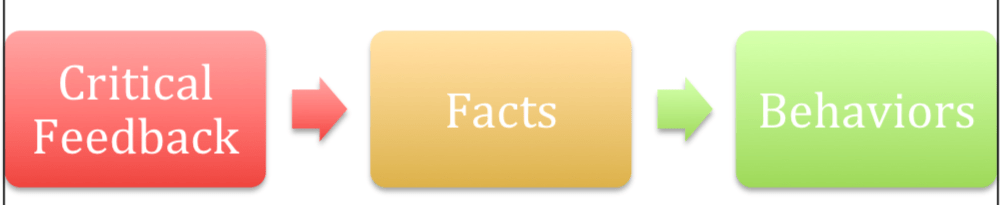
In giving feedback, the challenge can be just as great for leaders. We’ve all been taught the sandwich method: 1. Say something positive., 2. Share the constructive feedback, 3. Finish with something positive. Better yet, we all realize when it’s happening to us. For years, I’ve been trying to develop a mindset that helps me give and receive feedback in a meaningful way. What I’ve developed is a tool, I call the CFT, Critical Feedback Tool! It focuses on acknowledging the feedback you receive by identifying the facts and behaviors that come from the critical conversation and then making plans to develop action steps, or changes in behavior to change the facts.

screen-shot-2019-02-16-at-12.19.18-pm-e1552777317152.png

Something I believe effective leaders do exceptionally well is give AND receive critical feedback in meaningful ways. They are masterful experts at communicating with others in ways that help them improve their efforts and enhance their practices for the better.

I’d love to know if any of you think this tool could be useful in your leadership journey. I am continuing to use it in mine, and while practice does not make perfect, it certainly has helped me to make progress!

Until next time-be, you, be true, be a hope builder!

Latoya

#leadershipwithlatoya

The New Age Educator: An Advocate for Equity

Introduction

One of the earliest acknowledgments of the achievement gap came from James

Coleman’s 1966 study, The Equality of Educational Opportunity. The Civil Rights Act of 1964, section 402, required the commissioner of education to study and report to the President and Congress concerns regarding the “lack of availability of equal educational opportunities for individuals by reason of race, color, religion, or national origin in public educational institutions.” Coleman’s study followed the landmark Supreme Court decision of 1954 in Brown v. Board of Education that directed schools in the South to desegregate “with all deliberate speed.” In the years following this monumental and philosophical shift in the education of America’s public school children, few school districts expedited desegregation efforts. Using “freedom of choice” plans as a method of superficial compliance, Southern school districts were especially able to remain as equally segregated as they were prior to the Brown v. Board of Education ruling. By 1968, 77% of Black students attended majority Black schools nationwide (Orfield, 2001, as cited in Reardon and Owens, 2014). This resistance to follow the directive of the highest court in the land, accompanied by additional dissatisfaction regarding the lack of moral courage and political will to comply, resulted in hundreds of school districts being placed under court-order desegregation mandates by the mid 1970’s (Logan and Oakley, 2004, as cited in Reardon and Owens, 2014). In response to court-ordered desegregation, many Whites abandoned the public school system altogether, while others elected to enroll their children in districts that mirrored the demographics of the segregated schools they were more accustomed to having their children attend (Reardon & Owens, 2014), and when these court-ordered desegregations ended, a resurgence of segregation emerged. This response to the ending of mandated integration flies in the face of one of Coleman’s most notable conclusions from his 1966 report: “the social composition of the student body is more highly related to achievement, independent of the student’s own social background, than is any school factor” (p.22).

Although Coleman found differences in school resources among Black and White students, those variations were not large enough to account for the difference in achievement (Alexander and Morgan, 2016).  However, James Coleman’s 1966 study concluded something very important, and that is that family background was more indicative of a child’s achievement than other factors such as class size, per-pupil expenditures, curricular resources, and even teacher qualifications. This finding led to a fundamental shift in measuring school quality. Instead of focusing on the factors and inputs that affect student achievement, a focus on outcomes, notably standardized test scores, would consume the nation’s attention and efforts. This long-held view, that outcomes matter more than inputs, has led to a variety of policy decisions, public opinions, and scholarly recommendations. Coleman et al. (1966) noted:

Taking all these results together, one implication stands out above all: That schools bring little influence to bear on a child’s achievement that is independent of his background and general social context; and that this very lack of an independent effect means that inequalities imposed on children by their home neighborhood, and peer environment are carried along to become inequalities with which they confront adult life at the end of school. (p.325)

Several scholars have criticized Coleman’s research methods, yet further review confirms this particular finding regarding the impact of socioeconomic status on student achievement. According to Hanushek (2016), additional analyses have found aspects of family background to have a significant impact on achievement differences (p.23). Similarly, Khalenburg (2013) cites the 2012 study by Mantril, Perkins, & Aberger as confirmation of this finding as well:

In 2012, researchers found a strong statewide correlation between socioeconomic school segregation and the size of the achievement gap between low-income and higher-income students. Examining achievement gaps on NAEP for math and reading in 2007 and 2005, they found that Black and Latino students had smaller achievement gaps with Whites when they were less likely to be stuck in high-poverty school environments.  (p.4)

Citing the American Educational Research Association’s 2006 brief on the Parents Involved in Community Schools v. Seattle School District No.1, Darling-Hammond (2018) highlights the overwhelming conclusion regarding the inequity of segregated schools: “More often than not, segregated minority schools offer profoundly unequal educational opportunities. This inequality is manifested in many ways, including fewer qualified, experienced teachers, greater instability caused by rapid turnover of faculty, fewer educational resources, and limited exposure to peers who can positively influence academic learning. No doubt as a result of these disparities, measures of educational outcomes, such as scores on standardized achievement tests and high school graduation rates, are lower in schools with high percentages of nonwhite students” (p.4).

The Problem

Segregated schools are not a thing of the past. Bartz (2016) notes that the percentage of segregated schools has risen from 5.7% to 18.6% across our nation. The United States Government Accountability Office affirms this notion in their 2016 report, Better Use of Information Could Help Agencies Identify Disparities and Address Racial Discrimination. They concluded that between 2001 and 2013 public schools with high concentrations of Black and Hispanic students grew from 9% to 16%. The central problem of the achievement gap is clear: poverty and socioeconomics matter a great deal. Khalenburg (2013) agrees, stating, “the major problem with American schools is not teachers or their unions but poverty and economic segregation”(p.14). Yet educational leaders are reluctant to cite this overwhelming body of research and use their voices to activate a higher degree of moral courage and political will. Despite having substantial research and knowledge regarding the benefits of more integrated schools, school and district leaders look to politicians and government leaders to lead the way in making this a reality for America’s poorest children. Practitioners have an enormous opportunity to make the case that America’s schools can improve when America’s moral courage and political will to address its persistent opposition to equity improves as well.  Scholars such as Bartz (2016) rightly note that educators across the country have had minimal success in narrowing the achievement gap between Black and White students.  The response to this lack of success in closing the achievement gap can no longer result in “whatever it takes” and “no excuses” mantras, billions of dollars in test prep curriculum, and demoralized professional educators who treat their efforts as an isolated variable. We have already determined what it will take, just as Coleman’s 1966 report noted, a more balanced socially comprised student body. This is what educators across the country should be advocating for in addition to improved compensation, higher quality working conditions, and sharpened preparation programs. Internal conversations regarding the impact of concentrated poverty must extend themselves beyond the walls of the teacher’s lounge. Educational leaders must arm themselves with the research needed to redesign the notion of accountability that focuses solely on educational outputs while giving minimal credence to the critical inputs that substantially influence academic and life outcomes for children in our public schools.

In the December 2017 article, “A New Path for School Integration”, McDaniels frames the problem quite well. Concentrated poverty combined with racially isolated student bodies present educators and students with numerous challenges: limited curricular access and opportunities, minimal enrichment experiences, and a revolving door of inexperienced teachers.  McDaniel (2017) highlights two startling statistics that seem to confirm Darling-Hammond’s (2018) contention that our schools are becoming more segregated. “More than a third of students attend schools in which 90% of their peers are of the same race. Furthermore, 40% of the natation’s more than 1, 700 school districts are hypersegregated, meaning that most low-income students attend schools where 75% of the student body is also low-income” (p. 2). While an analysis of 2013 National Assessment of Education Progress (NAEP) results point to a continued gap in achievement between White and minority students (Bartz, 2016), the court-mandated desegregation era offers a counter-narrative. Efforts made to make the public education experience a more equitable one through the targeting of resources via the 1965 Elementary and Secondary Education Act through programs like Title I and bilingual education, which supported school desegregation and in turn helped improve academic achievement for minority students. According to Darling-Hammond (2018), the achievement gap in reading decreased by over 50% for the nation’s 13-year-olds based on NAEP results between 1971 and 1988 and reduced by 20 points in math during the same period. The results of more socially and racially integrated schools ought to be enough to convince educational leaders to activate their voices and advocate for what we know works to improve academic outcomes for our most marginalized students.  Instead of asking what programs will help reduce today’s achievement gap or what cocktail of consequences might motivate educators to produce better results, we should be asking a different question: What is keeping us from doing what we know works for all students and does harm to none?

Conclusion

There is substantial evidence that socioeconomic integration disrupts a pattern of concentrated poverty and produces improved academic outcomes for those who are on the deficit end of the achievement gap and at a minimum, does no harm to those who are not (Khalenberg, 2013). Educators cannot afford to refrain from this conversation. School reform efforts must include the voices of practitioners who can speak to the impact of segregated schools with high concentrations of poverty firsthand. If educational leaders stand down instead of speaking up, the resistance to doing what we know works may continue and the gaps in achievement are likely to widen. The resistance to address school inequity through means of integration is strong. According to McDaniels (2017) “since 2000, 71 communities have tried to secede from their school districts. 47 of these efforts were successful” (p. 47). In June of 2018, the North Carolina House ratified HB514 that would make it possible for suburban municipalities to create, operate, and partially fund their own charter schools, giving enrollment priority to area children. This type of political maneuvering to resist integration has already proven itself disastrous via Coleman’s 1966 report, yet the idea is popular in Southern suburban communities. In Bauman’s June 2017 Chalkbeat article titled, “Memphis-Shelby County Spotlighted in National Report on School District Secession”, she cites research from EdBuild (2018), a nonprofit group that focuses on inequity and education funding. Additionally, Bauman notes two important factors: the timing of the Shelby County secession and the reasoning behind the desire to secede. Prior to this effort to separate, a merger of Memphis City Schools, a mostly black and lower-income district, with Legacy Shelby County Schools, a suburban, and mostly white and affluent district, had taken place. Shelby County wanted to establish a special school district that would significantly and negatively impact funding for the lower income Memphis district and had sought to do so since 2008. To avoid this reduction in funding on top of an already financially strained situation, members of the Memphis City Schools voted to dissolve its school system in 2010, which left its schools under the control of Shelby County Schools. Shelby County citizens, however, didn’t share the same sentiment. In essence, members of the Shelby County community did not agree with their suburban tax dollars being used to support Memphis City Schools. Additionally, the Shelby County School Board worked with their legislative delegation to reverse a ban on the creation of new school districts and a new law allowed for the suburban areas of Shelby County to “break away while opening the door for any municipality in the state with a population of 1, 500 to secede, as long as it had the support of a majority of municipal voters” (EdBuild, 2018). Due to the Shelby County Schools secession, six affluent communities in Tennessee followed their lead and by the start of the 2014-15 school year, each community had established separate school districts. While some say the motivation to separate centered around socioeconomics and local control rather than race, there is an important lesson to learn here: creating separate and smaller districts is fiscally irresponsible and inherently inefficient. Bauman cites EdBuild’s 2018 report affirming such in her July 2017 Chalkbeat article: “The United States spends $3,200 more on students enrolled in small districts (of fewer than 3,000 students) than on larger districts  (of 25,000 to 49,999 students) according to the report. Small districts also tend to spend about 60 percent more on per-pupil administrative costs.“ This growing trend of more affluent communities creating separate districts should be concerning to all educators. The implications are broad and go beyond the impact on student outcomes. There are other important factors that come in to play as a result of concentrated poverty such as frequent turnover at the teacher and leadership levels, greater limits in curricular and enrichment experiences (Bartz, 2016) and reduced quality in professional development opportunities for educators. Yet these types and degrees of resistance aren’t new. In an effort to put off integration, South Carolina enacted a school equalization program whereby legislators approved a multi-million dollar effort to keep schools segregated. In doing so, the state would build new schools for African-American children to prove its’ efforts toward providing equitable facilities and escape the potential desegregation ruling that was sure to come after the 1951 Briggs v. Elliot case in Clarendon County, South Carolina. The case resulted in a three-judge panel ordering the school board to make an effort to equalize school facilities (Dobrasko, 2018).

Educational leaders must not underestimate their role in advocating for a balanced and more integrated school experience for our students. If we cannot appeal to people’s hearts, perhaps an appeal to their mind or their pocketbooks might work. We know the financial waste that comes from the creation of small school districts (EdBuild, 2018). We are aware of the impact on achievement in schools with high concentrations of poverty (Bartz, 2016). Despite this knowledge, we’ve been reactive in dealing with the effects of these factors, trying to work within the limitations and constraints placed upon us, rather than putting forth efforts to address the causes of this challenge and change those policies and decisions that we know create gaps in achievement for students. As we move forward, educators have a new role to play and must be willing to speak out if we are serious about dismantling the achievement gap and the institutionalized and systemic structures of racism that accompany it. According to Khalenberg (2013), some school districts have successfully encouraged socioeconomic integration. Some of the most notable recommendations to support solving this challenge include the following:

  1. State and local leaders should consider consolidating school systems to advance the potential of integrating schools at scale (McDaniels, 2017).
  2. Policymakers should look beyond attendance zones and boundary maps to consider the consolidation of schools or school districts as a mechanism of breaking up large concentrations of poverty or racially isolated student populations (McDaniels, 2017).
  3. States and local communities should invest in high-quality preschool for children from low-income households (Darling-Hammond, 2018).
  4. Local communities and large metropolitan cities should consider expanding and/or preserving affordable housing in high performing school zones (Darling-Hammond, 2018).

If educational leaders intend to play a role in dismantling the inequity in public education, it will mean raising awareness through the sharing of scholarly literature, engaging in political discourse and policy creation, and using our democratic power to demand that America addresses its persistent approval of policies and accountability requirements that perpetuate the very gap it seeks to close. Failure to do so will result in a continuation of the popular, yet faulty widespread negative narrative that our public schools are failing our children, especially those in our most vulnerable communities. We know better and therefore, we must do a better job of being informed thought leaders and advocates for equity. We can start by asking parents, community members, policy makers, legislators, and other stakeholders a new question to answer: What are we willing to do to close the achievement gap?

References

Alexander, K., & Morgan, S. L. (2016). The Coleman report at fifty: Its legacy and implications for future research on equality of opportunity. The Ru¡ssell Sage Foundation Journal of the Social Sciences, 2(5), 1–16. Retrieved from http://www.rsfjournal.org/doi/full/10.7758/RSF.2016.2.5.01

Bartz, D. E. (2016). Revisiting James Coleman’s epic study entitled equality of educational opportunity. National Forum of Educational Administration and Supervision Journal, 34(4), 1-10.

Bauman, C. (2017, June 21). Memphis-Shelby county spotlighted in national report on school district secession. Chalkbeat. Retrieved from https://www.chalkbeat.org/posts/tn/2017/06/21/memphis-shelby-county-spotlighted-in-national-report-on-school-district-secession/

Coleman, J. S. (1966). Equality of educational opportunity. Retrieved from https://files.eric.ed.gov/fulltext/ED012275.pdf

Darling-Hammond, L. (2018). Education and the path to one nation, indivisible. Palo Alto, CA: Learning Policy Institute. Retrieved from https://learningpolicyinstitute.org/sites/default/files/product-files/Education_Path_To_One_Nation_BRIEF.pdf

Dobrsako, R. (2018). South Carolina Equalization Schools 1951-1960 [Website]. Retrieved from http://www.scequalizationschools.org/equalization-schools.html

EdBuild. (2018). Fractured: the breakdown of America’s school districts [Report]. Retrieved from https://edbuild.org/content/fractured#shelby

Hanushek, E.A. (2016). What matters for student achievement. Education Next, 16 (2), 18-26.

Kahlenberg, R. D. (2013). From All Walks of Life: New Hope for School Integration. American Educator, 36 (4), 2.

Logan, J.R. and Oakley, D. (2004). The continuing legacy of the Brown decision: court action and school segregation, 1960-2000. Retrieved from http://mumford.cas.albany.edu/schoolsegregation/reports/Brown_report_1_28.pdf

Mantil, A., Perkins, A. G., & Aberger, S. (2012). The challenge of high-poverty schools: How feasible is socioeconomic school integration?. The Future of School Integration, 155-222.

McDaniels, A. (2017, December 19). A New Path for School Integration. Retrieved from https://www.americanprogress.org/issues/education-k-12/news/2017/12/19/444212/new-path-school-integration/

Orfield, G. (2001). Schools more separate: Consequences of a decade of resegregation. Retrieved from https://files.eric.ed.gov/fulltext/ED459217.pdf

Reardon, S. F., & Owens, A. (2014). 60 years after Brown: Trends and consequences of school segregation. Annual Review of Sociology, 40.

United States Government Accountability Office (GAO). (2016). Better use of information could help agencies identify disparities and address racial discrimination (GAO 16-345). Washington, DC: Government Printing Office. Retrieved from http://www.gao.gov/products/GAO-16-345

Reflections on 2018 #OneWord: FORWARD

My #oneword for 2018 was FORWARD. I wanted to concentrate on moving forward in every aspect of my life and work diligently to improve my resilience. In 2017, I had a breakthrough moment in my personal life. I realized that I had likely spent half of my life (if I am blessed to live an equal amount beyond the present) worrying. I worried about everything, no matter how big or how small. I took myself too seriously. I spent a great deal of time trying not to make any mistakes and then digging myself out from beating myself up for having made an error of some kind. It dawned on me that for all the worrying I had done, none of the things I often feared as my mind went to worst case scenario had actually come to fruition. I resented all the nights I could not sleep, all the time I spent worrying instead of having fun, and I promised myself in 2018 that I was done worrying. No more sleepless nights, no more stressing out over things I could not control, and no more trying not to make any mistakes…a nice way of saying I was releasing myself from my perfectionistic tendencies.

Some people who know me are likely to say they don’t see this or didn’t know this, but ask any of my closest friends, any of my former supervisors, or my family and they will tell you it is true. I need no external pressure to do a good job. I do an outstanding inside job of that on my own. I have always struggled with anxiety. From the time I was a small child, I was described as conscientious. At school I was usually able to hold it together, but at home I battled with worry and anxiety often. Whether it was math homework frustration or worrying because my mom was later than usual getting home, my worry wire was active at an early age. Being conscientious is a part of who I am, but it no longer holds me hostage or sends me into a spiraling series of self-doubt. After nearly 20 years as an educator and a work record that I am proud of, I recognize that this life is short and I’ve given it my best and plan to continue doing so. That is enough and it always will be.

I chose the word FORWARD for 2018 because I wanted to focus on moving on, not getting bogged down in what went wrong or what might go wrong, but having a really balanced perspective that didn’t require an unrealistic pressure to get everything right the first time. I still focused on doing my best but I accepted that mistakes would be inevitable. I would make them, but the important thing was to focus on how to move forward, on my ability to bounce back and move on, on my resilience. I am so glad I did because 2018 was a great year.

In 2018 I found myself focused on being happy, having fun, and working hard. For me, the word FORWARD, didn’t mean to keep going in a careless manner. Instead it meant to move forward with courage, and to not allow fear to hold me hostage. This prevailing thought gave me freedom in ways I never imagined. I didn’t overthink wearing my favorite sneakers, Air Jordan’s, on the weekend, releasing my self published book, making rap music for fun, or writing more scholarly articles and submitting them for publication even if rejection would be the result. I trusted myself and my abilities. I finally realized that no matter what happens I would be alright and it, whatever it was, would also be alright. Experience said so. In 2018, I gave myself the freedom to be me and I have never felt more free and happy. There’s still room for growth, but I am off to a good start and I feel amazing. I hope this continues in 2019 because it’s amazing what the word FORWARD did for me in one year and I can only imagine what might be if I can keep this trend going for years to come. That’s why my #oneword for 2019 is FORWARD. It’s my eternal resolution.

Until next t time-Be you! Be true! Be a hope builder!

Latoya

@latoyadixon5

The Competition Myth: Confronting the Consequences​ of Making Public School a Competitive Experience

Many economists assert that competition is a driving force that catalyzes improvement in businesses. BusinessDictonary.com defines it this way:

Competition:
Rivalry in which every seller tries to get what other sellers are seeking at the same time: sales, profit, and market share by offering the best practicable combination of price, quality, and service. Where the market information flows freely, competition plays a regulatory function in balancing demand and supply.

I am no business expert, but I think I have a basic understanding of this concept. Let’s use an analogy to help make this clear. Apple’s iPhone has driven the market in cellular phones. Samsung, LG, Tracfone, and others have had to improve their combination of price, quality, and service when it comes to the smartphone movement. As Apple has linked several of its’ other devices to the smart phone-think Apple Watch, Ipad/Ipad Pro, MacBook, it has created a community of consumers who more often than not own multiple products. By making sure the smartphone they design changes the way we work, live, socialize, and entertain ourselves, they force companies like Samsung and LG to create products like the Galaxy that can perform similar functions for a more reasonable price. This theory works well for products, for actual things because it diversifies the market, ensures that company innovations match consumer needs, and creates an opportunity for everyone to have a smartphone, even if they can’t afford iPhone X.

Some believe this same concept can help create better schools, and force educators to improve their practices to remain relevant in the market. They argue that adopting this philosophy to teaching and learning can help create better-prepared teachers, more motivated students, and force school districts to improve the quality of learning they offer when parents have other choices for their child’s educational experiences. A fundamental reason for competition is its effects in creating a diversified marketplace for better schools. After many years of a great deal of advocacy for a competitive mindset to be applied to American schooling, one has to ask, have all of our schools improved and gotten better as a result of this competition mindset we’ve adopted?

Hart and Figlo answered that question this way in their 2011 Education Next article, Does Competition Improve Public Schools

It is notoriously difficult to gauge the competitive effects of private schools on public school performance. Private schools may be disproportionately located in communities with low-quality public schools, causing the relationship between private school competition and public school performance to appear weaker than it actually is. If, however, private schools are located in areas where citizens care a lot about educational quality, the relationship will appear stronger than it truly is.

Other scholars now say that competition improves not only the quality of public schools but can also improve outcomes for students. In Bozzo’s 2016 article, School Vouchers: A Vehicle to Induce Greater Competition In Public Schools, she concludes:

“Many previous voucher studies have found that programs are successful at increasing competition and student academic outcomes but only on the lowest and highest performing public school students and in the most competitive school districts. Therefore, voucher programs are not an education reform that will work for all student groups and for all states, and vouchers will not be the panacea that will help all low-performing students to catch up. Moreover, precautions must be taken to ensure that heightened scrutiny and competition do not lead to negative unintended consequences, such as cheating and increased stress for students. Despite these limitations, greater competition has led to increases in student achievement in public schools in Ohio and Florida, particularly among the lowest performing students. Future studies and efforts should continue to identify the distinctive populations and contexts that can successfully use vouchers to foster greater competition and promote improvements in educational performance, particularly for vulnerable populations.”

The question I am left with is who are the children that end up on the downside of this competition? Unlike second place smartphones like the Galaxy when compared to the Iphone X, I believe none of our children deserve a second place education. When competition comes into play, it means there are winners and losers. It means someone has to be the best and someone has to be the worst. It means some schools have to be exceptionally better than others and some have to be exceptionally worse. That troubles me greatly because I believe all children deserve a high-quality education and none deserve to be on the lower end of the competition chain in their educational experience. What happens to those children whose parents don’t have the means or capacity to choose? What happens to the children whose mothers and fathers happen to not be engaged at all in their education? Who deserves the Iphone X education versus the Tracfone education?

The competition concept is a myth because I am uncertain as to whether it makes us ALL better. Instead, I believe it creates exceptionally great access and educational opportunity for some while others are left behind. I worry often that choice, which sounds good in theory, leaves some students with no choice at all. I think the education of students is far too complex to apply a broadly based business theory to an exercise in human interaction. I may be too utopian and idealistic in my beliefs, but I can’t help but think about the children on the bottom of the competition and what it means for them.

I think we’d be wise to look at this concept as something to be applied based on context, if and when it can be helpful, instead of broadly across public education. I remain uncertain as to how this impacts teacher and leadership retention, and how it impacts the rhetoric that some public schools are failures when in reality the idea of competition means someone has to fail in order for someone else to succeed. I have no answers for this myth, except to say it is something that stays heavily on my mind. What I know for sure, is that I believe all means all and that all students deserve the absolute best education we can offer them and I am not sure that is something we should make competitive.

Until next time- Be you! Be true! Be a hope builder!

Latoya

@latoyadixon5